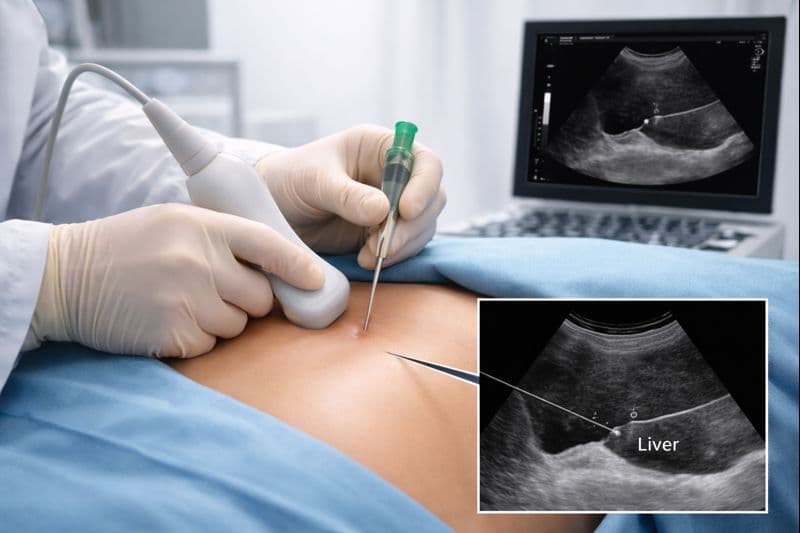
Liver Biopsy
A liver biopsy is a procedure to obtain a small sample of liver tissue for microscopic examination. It remains an established clinical method for diagnosing and staging many liver diseases and provides information that cannot be obtained from blood tests or imaging alone.
Book a ConsultationWhy is Liver Biopsy Performed?
While non-invasive tests like FibroScan and blood markers have reduced the need for liver biopsy, it remains a clinically indicated procedure in certain situations where definitive tissue diagnosis is required. A liver biopsy can provide detailed information on the type, cause, and severity of liver disease.
Indications for Liver Biopsy
- Unexplained abnormal liver function tests
- Suspected metabolic or autoimmune liver disease
- Assessing severity of known liver disease (e.g., hepatitis B or C)
- Evaluating liver masses or tumours
- Monitoring liver transplant recipients for rejection
- Diagnosing conditions not identified by other tests
- Grading and staging of liver fibrosis when FibroScan is inconclusive
Preparing for Your Biopsy
Blood Tests
Blood clotting tests (PT/INR) and platelet count will be checked to prioritize patient safety during the biopsy.
Medication Review
Stop blood thinners (aspirin, warfarin, clopidogrel) as advised by your doctor, usually 5-7 days before.
Fasting
Fast for at least 6 hours before the procedure.
Arrange Transport
You will need someone to take you home after the procedure as you cannot drive for 24 hours.
Imaging
An ultrasound may be performed beforehand to identify a suitable biopsy site.
What Happens During the Procedure?
A liver biopsy is typically performed as a day procedure under local anaesthesia. The entire process takes about 15-30 minutes, though you will need to rest for several hours afterwards for monitoring.
Positioning
You will lie on your back with your right hand behind your head, exposing the right side of your abdomen.
Ultrasound Guidance
Ultrasound is used to locate the liver and identify a safe path for the biopsy needle.
Local Anaesthetic
The skin and deeper tissues are numbed with local anaesthetic. You may feel a brief sting.
Biopsy
A thin needle is inserted through the skin into the liver. You may be asked to hold your breath briefly. A small tissue sample is taken in seconds.
Recovery
Pressure is applied to the site and you will rest lying on your right side for 2-4 hours to minimise bleeding risk.
Risks and Complications
Liver biopsy is generally safe, especially when performed by an experienced specialist with ultrasound guidance. However, like any invasive procedure, there are potential risks.
Pain
Mild pain at the biopsy site or referred pain to the right shoulder is common and usually settles within 24 hours.
Bleeding
Minor bleeding occurs in about 1% of cases. Significant bleeding requiring transfusion or intervention is rare (<0.5%).
Infection
Infection at the biopsy site is very rare when proper sterile technique is used.
Puncture of Other Organs
Accidental puncture of the gallbladder, kidney, or lung is rare, especially with ultrasound guidance.
Bile Leak
Bile leakage from punctured bile ducts is a rare complication that may require further treatment.
After Your Biopsy
- Rest at home for 24 hours after the procedure
- Avoid heavy lifting or strenuous activity for 1 week
- Take prescribed pain relief as needed (usually paracetamol)
- Avoid blood thinners until advised by your doctor
- Report any severe pain, fever, dizziness, or signs of bleeding immediately
- Follow-up appointment to discuss biopsy results (usually within 1-2 weeks)
Seek immediate medical attention if you experience severe abdominal pain, fever, dizziness, shortness of breath, or signs of bleeding after your biopsy.
Specialized Hepatology Care
Dr. Prem Thurairajah is a Senior Consultant in Gastroenterology and Hepatology with extensive experience in liver biopsy and liver disease management. His training at major UK liver transplant centres and PhD in hepatitis C is the basis for specialized care for patients requiring liver biopsy.
All biopsies are performed with ultrasound guidance to maximise safety and accuracy, and tissue samples are reviewed by experienced liver pathologists to support a reliable diagnosis.
Frequently Asked Questions
Common questions about liver biopsy and what to expect.
Need a Liver Biopsy?
If you have been advised to undergo a liver biopsy or have questions about your liver health, schedule a consultation to discuss your options.
Disclaimer: The information provided on this page is for educational purposes only and is not intended as a substitute for professional medical advice, diagnosis, or treatment. Always seek the advice of your physician or other qualified health provider with any questions you may have regarding a medical condition.