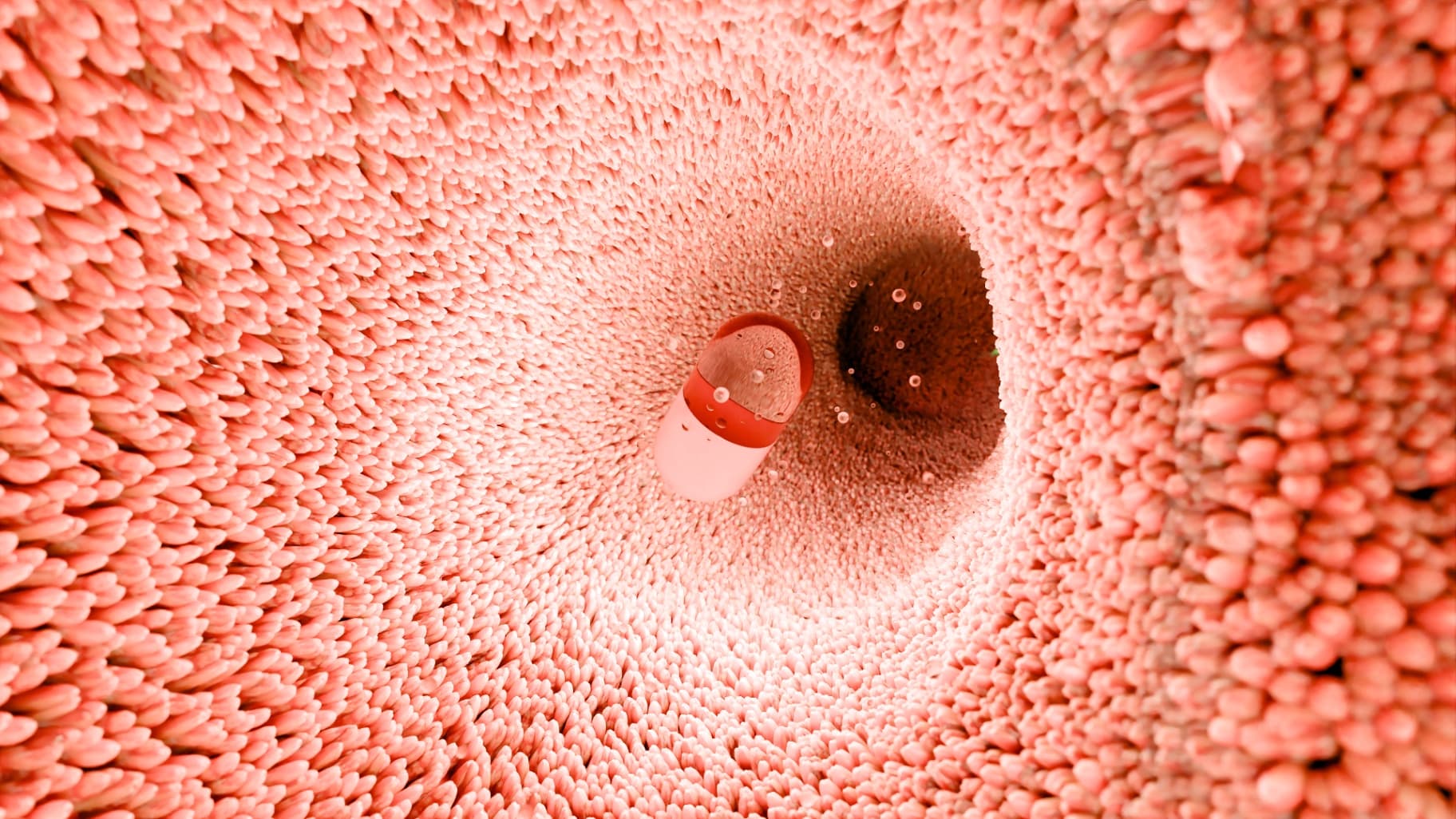
Video Capsule Endoscopy
Small Bowel Camera
Video capsule endoscopy is a specialized diagnostic technology that allows for extensive visualisation of the small intestine - an area that cannot be reached by standard gastroscopy or colonoscopy. By swallowing a tiny camera in a capsule, we can diagnose conditions that would otherwise require complex procedures or remain undetected.
Book a ConsultationWhen is Capsule Endoscopy Needed?
The small intestine is approximately 6 metres long and lies between the stomach and colon. Standard endoscopes can only reach the first part (duodenum) and last part (terminal ileum). Video capsule endoscopy fills this diagnostic gap by visualising the entire small bowel.
Common Indications
- Obscure gastrointestinal bleeding (after normal gastroscopy and colonoscopy)
- Suspected small bowel tumours or polyps
- Investigation of unexplained iron deficiency anaemia
- Suspected or known Crohn's disease affecting the small bowel
- Surveillance in polyposis syndromes (e.g., Peutz-Jeghers syndrome)
- Suspected small bowel damage from NSAIDs or other medications
- Evaluation of coeliac disease complications
Advantages of Video Capsule Endoscopy
Complete Small Bowel Visualisation
An established non-invasive method to directly visualise the entire small intestine, an area unreachable by standard endoscopy.
Minimally Invasive & Designed for Comfort
Minimal discomfort for most patients. No sedation, no recovery time needed.
Detailed Digital Imaging
Takes thousands of high-resolution images as it travels through your digestive tract over 8-12 hours.
Normal Daily Activities
Continue your usual activities while the capsule records. Return the recorder after the test is complete.
Preparing for Your Test
Clear Liquid Diet
Start a clear liquid diet the day before the procedure (water, clear broth, tea without milk).
Bowel Preparation
You may be asked to take a mild laxative solution the evening before to improve visualisation.
Fasting
Fast overnight (at least 10-12 hours) before swallowing the capsule.
Medication Review
Discuss all medications with your doctor. Some may need to be temporarily stopped.
Wear Comfortable Clothing
You will wear a sensor belt or vest for the duration of the test. Loose clothing is recommended.
What Happens During the Procedure?
The procedure is simple and non-invasive. You swallow the capsule in the clinic and continue your normal activities while it records images throughout the day.
Sensor Setup
Small sensor patches are placed on your abdomen, connected to a data recorder worn on a belt.
Swallow the Capsule
The vitamin-sized capsule is swallowed with water. It begins taking pictures immediately.
Resume Activities
After 2 hours, you can drink clear fluids. After 4 hours, you can eat a light meal.
Recording Period
The capsule travels through your digestive system over 8-12 hours, capturing thousands of images.
Return Equipment
Return the recorder and belt to the clinic. The capsule passes naturally in your stool and is disposable.
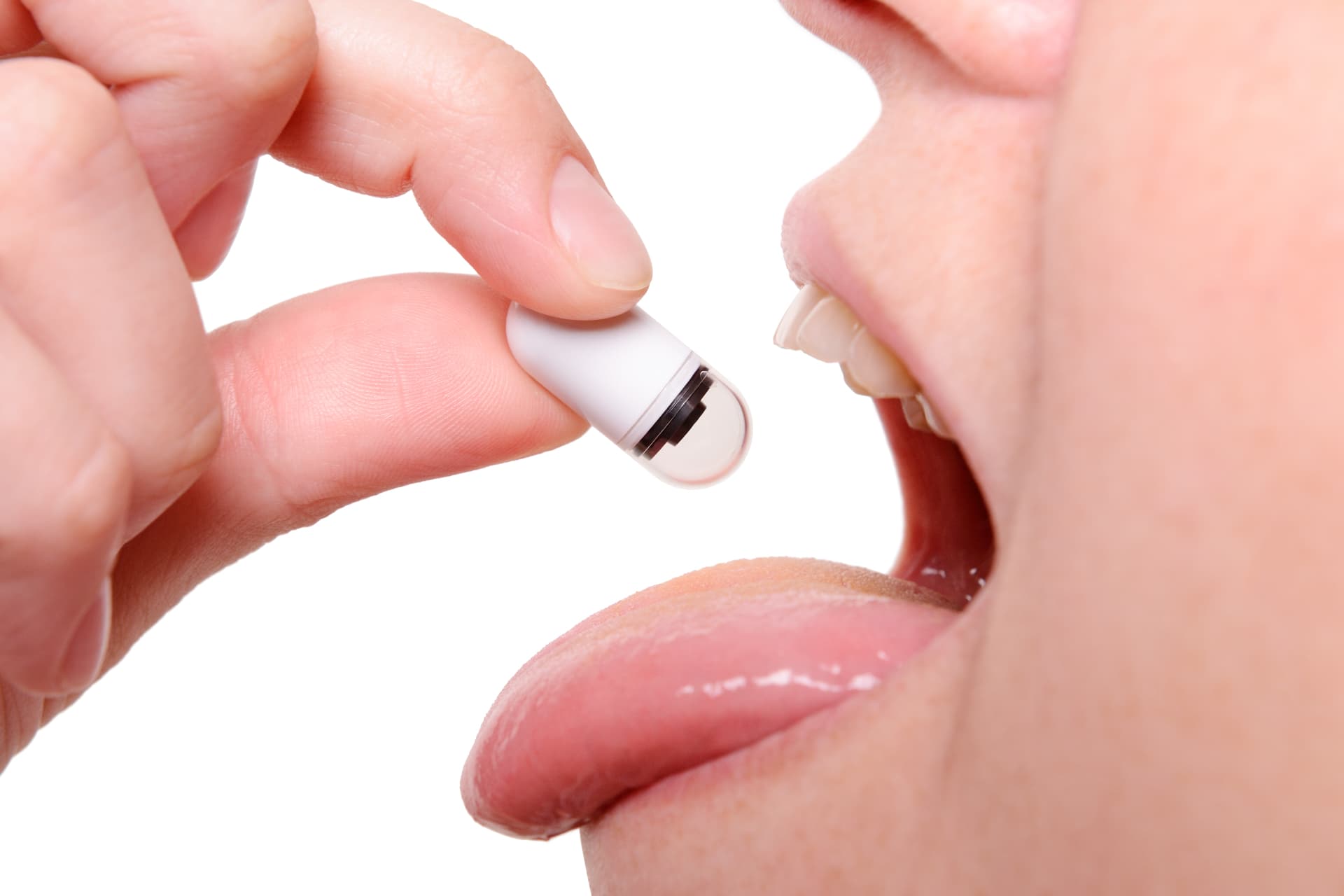
Swallowing the vitamin-sized capsule camera

The capsule camera and recording equipment
What Can It Detect?
Video capsule endoscopy can identify a wide range of small bowel abnormalities.
Bleeding Sources
Angiodysplasias, ulcers, erosions, and other causes of occult or obscure GI bleeding.
Tumours & Polyps
Small bowel tumours, adenomas, and other growths that may not be visible on CT or MRI.
Inflammatory Conditions
Crohn's disease ulcers, strictures, and inflammation affecting the small intestine.
Vascular Abnormalities
Arteriovenous malformations and other vascular lesions causing bleeding.
Limitations & Risks
No Tissue Sampling
Unlike standard endoscopy, the capsule cannot take biopsies or perform therapeutic interventions.
Capsule Retention
In patients with strictures, the capsule may become lodged and require endoscopic or surgical removal (risk ~1-2%).
Incomplete Examination
The capsule may not reach the colon before the battery runs out in some patients with slow gut transit.
Image Quality
Poor bowel preparation or rapid transit can affect image quality and diagnostic accuracy.
Contraindications
- Known or suspected bowel obstruction or strictures
- Swallowing disorders or inability to swallow the capsule
- Pacemakers or implantable defibrillators (relative contraindication)
- Pregnancy
- Previous abdominal surgery with suspected adhesions (relative)
Investigate Your Small Bowel
If you have unexplained GI bleeding, iron deficiency anaemia, or suspected small bowel disease, schedule a consultation to discuss video capsule endoscopy.
Related Conditions
You may also be interested in learning about these related conditions.
Disclaimer: The information provided on this page is for educational purposes only and is not intended as a substitute for professional medical advice, diagnosis, or treatment. Always seek the advice of your physician or other qualified health provider with any questions you may have regarding a medical condition.